A child’s development is shaped by everyday experiences long before parents notice a specific developmental milestone. Simple activities such as talking, playing, reading, eating together, encouraging movement and responding to a child’s emotions can become important opportunities for learning. The World Health Organization describes nurturing care as including good health, adequate nutrition, safety and security, responsive caregiving, and opportunities for early learning.
Parents do not need expensive toys or complicated programmes to support development. What matters most is creating a safe, responsive and engaging environment where children can communicate, explore, practise skills and build confidence.
For families looking for professional guidance, a Child Development Center near me can also provide assessment and individualized support when a child needs additional help.
At Kalp Clinic, Shyamal, Ahmedabad, Dr. Prabha Harwani(PT) – Paediatric Therapist and the therapy team focus on child-centred developmental support based on each child’s individual needs.
What Does Healthy Child Development Include?
Child development is not limited to physical growth. It involves several interconnected areas that develop gradually through everyday experiences.
These may include:
- Physical and motor development – sitting, walking, running, jumping, balance and coordination.
- Speech and language development – understanding instructions, using words, communicating needs and having conversations.
- Cognitive development – attention, memory, problem-solving, learning and reasoning.
- Social development – interacting with parents, siblings, teachers and other children.
- Emotional development – recognising feelings, expressing emotions and developing self-regulation.
- Adaptive and self-help skills – eating, dressing, toileting and completing age-appropriate tasks independently.
Children develop at different rates. A difference in one skill does not automatically mean that a child has a developmental disorder. However, persistent concerns or multiple delays should be discussed with an appropriate professional.
1. Make Everyday Conversation a Priority
One of the easiest ways to support child development is to talk with your child throughout the day.
Instead of limiting communication to instructions such as “eat your food” or “wear your shoes,” parents can turn ordinary activities into language-learning opportunities.
For example:
- Talk about what you are cooking.
- Name objects while shopping.
- Describe colours, shapes and sizes.
- Ask simple questions.
- Encourage your child to explain what they are doing.
- Expand on your child's words instead of immediately correcting them.
- Give your child enough time to respond.
UNICEF highlights responsive communication, active listening and verbal and non-verbal interaction as important parts of building children's communication and emotional development.
The goal is not to turn every conversation into a lesson. Natural interaction is the lesson.
2. Use Play as a Learning Opportunity
Play is one of the most natural ways children learn.
Building blocks, pretend play, puzzles, drawing, ball games and simple household activities can support different developmental skills.
For example:
Building blocks can encourage:
- Hand coordination
- Spatial awareness
- Problem-solving
- Planning
Pretend play can encourage:
- Imagination
- Language
- Social interaction
- Emotional expression
Ball games can support:
- Balance
- Gross motor coordination
- Visual tracking
- Turn-taking
UNICEF's child-development resources describe play as an opportunity to develop physical, cognitive, communication and social skills through interaction with caregivers.
Parents do not always need to direct the activity. Sometimes, simply joining the child's play and following their interests can create valuable interaction.
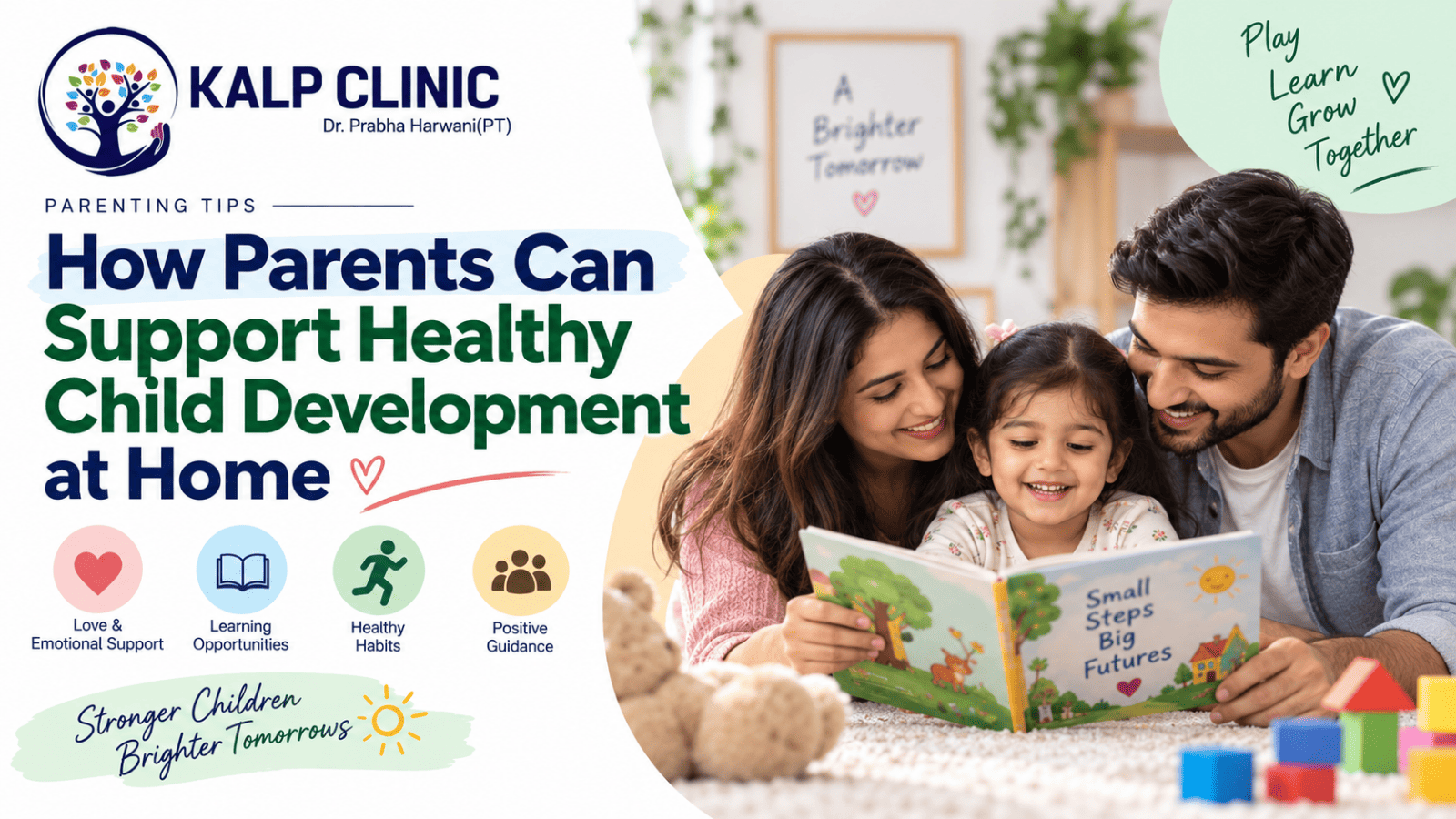
3. Read Together Every Day
Shared reading can support language development, listening skills, attention and early literacy.
For younger children, parents can start with picture books. Ask questions such as:
- “What do you see?”
- “Where is the dog?”
- “What is the boy doing?”
- “What do you think happens next?”
For older children, parents can discuss characters, events and possible endings.
Reading together also creates opportunities for parent-child interaction, rather than making reading an isolated academic activity.
Even a short, consistent reading routine can become a valuable part of the child's day.
4. Encourage Independence Instead of Doing Everything
Parents naturally want to help their children. However, doing every task for a child can reduce opportunities to practise independence.
Age-appropriate independence may involve:
- Putting toys away.
- Choosing between two suitable clothes.
- Feeding themselves.
- Carrying a school bag.
- Washing hands.
- Helping with simple household tasks.
- Putting shoes in their usual place.
- Packing simple items with supervision.
Parents can provide assistance when necessary while allowing children to attempt tasks themselves.
A useful approach is:
Help → demonstrate → practise together → gradually reduce assistance.
The objective is not perfection. It is skill-building and confidence.
5. Create Predictable Daily Routines
Children often benefit from knowing what to expect next.
A predictable routine can make everyday transitions easier and support independence.
A basic routine might include:
- Wake-up time
- Breakfast
- School or learning activities
- Outdoor/play time
- Meals
- Rest
- Reading
- Bathing
- Bedtime
A routine does not need to be rigid. Families can adjust it according to school schedules, activities and individual needs.
Visual schedules can also be useful for children who benefit from seeing what comes next.
6. Support Emotional Development Through Connection
Children need opportunities to understand and communicate their emotions.
Instead of immediately dismissing feelings, parents can acknowledge them.
For example:
“I can see that you are disappointed.”
“You wanted to continue playing.”
“It is okay to feel upset. Let's talk about what happened.”
This does not mean allowing every behaviour. Parents can acknowledge the emotion while maintaining appropriate boundaries.
For example:
“It is okay to feel angry, but hitting is not okay. Let's find another way to tell me what you need.”
This approach helps separate feelings from actions and creates opportunities for children to practise healthier communication.
7. Give Children Opportunities for Movement
Physical activity is an important part of development.
At home, parents can encourage age-appropriate movement through:
- Walking
- Running
- Jumping
- Dancing
- Throwing and catching
- Climbing safely
- Obstacle courses
- Outdoor games
- Balance activities
Movement can be incorporated into everyday family life rather than treated only as exercise.
For younger children especially, active play can provide opportunities to practise coordination, body awareness and motor skills.
8. Make Screen Time More Intentional
Screens are part of modern family life, so the goal does not need to be simply “no screens.”
Parents can instead focus on how, when and why screens are being used.
Consider:
- Is the child watching age-appropriate content?
- Is screen use replacing sleep, movement or family interaction?
- Does the child have opportunities for hands-on play?
- Are meals regularly becoming screen-based?
- Does the child struggle significantly when the screen is removed?
- Are parents also modelling balanced technology use?
Whenever possible, parents can participate in appropriate digital activities rather than leaving the child alone with a device.
Most importantly, screens should not replace the everyday experiences through which children learn to communicate, move, explore and interact.
9. Encourage Problem-Solving Instead of Immediately Giving Answers
Children learn through trying.
When your child faces a simple problem, avoid solving everything immediately.
For example, if a toy is stuck, ask:
- “What could we try?”
- “Can you think of another way?”
- “What happened when you tried that?”
- “Should we try it together?”
Parents can provide hints when necessary without taking over.
This supports:
- Problem-solving
- Flexible thinking
- Persistence
- Decision-making
- Confidence
The goal is to help children gradually become active problem-solvers.
10. Give Positive Attention to Desired Behaviours
Children often receive the most attention when something goes wrong.
Parents can change this pattern by deliberately noticing positive behaviours.
Instead of simply saying “Good,” be specific:
- “You waited for your turn.”
- “You put your toys away without being asked.”
- “You told me what you wanted using words.”
- “You kept trying even when it was difficult.”
Specific positive feedback helps children understand which behaviour was appropriate.
It also provides parents with opportunities to strengthen useful daily skills without relying entirely on correction.
11. Spend Quality One-to-One Time
A child does not always need an elaborate activity. Sometimes they simply need focused attention from a parent.
Try creating short periods where:
- Phones are put away.
- The television is off.
- The parent follows the child's activity.
- The child gets opportunities to choose.
- The parent listens without constantly correcting.
This type of interaction can strengthen the parent-child relationship and create opportunities for communication and social learning.
UNICEF's Care for Child Development approach specifically promotes coaching caregivers around play and communication so they can observe, interpret and respond appropriately to children's signals.
12. Don't Compare Your Child With Other Children
One child may speak early while another develops physical skills more quickly. Another child may need more time to become comfortable in social situations.
Constant comparison can create unnecessary pressure.
Instead of asking:
“Why can't my child do what that child does?”
focus on:
“What can my child do today, and what is the next skill we can help them practise?”
Development should be viewed as an individual process.
At the same time, parents should not ignore genuine concerns simply because “every child is different.” If a child is consistently struggling with communication, movement, learning, behaviour, social interaction or daily activities, professional guidance can help clarify the situation.
When Should Parents Consider Professional Child Development Support?
Home activities are valuable, but they cannot replace professional assessment when a child has persistent developmental concerns.
Parents may consider consulting a child development professional if they notice:
- Delays in speech or communication
- Difficulty following age-appropriate instructions
- Persistent difficulty with social interaction
- Motor skill concerns
- Problems with attention or learning
- Difficulty with daily self-care skills
- Sensory-related challenges
- Significant behavioural concerns
- Regression or loss of previously acquired skills
- Concerns about developmental milestones
WHO's 2026 guidance emphasizes that children with developmental delays or disabilities need nurturing care and that family-centred, coordinated support may be required according to individual needs.
Early professional guidance does not necessarily mean that a child has a serious problem. It can simply help parents understand their child's strengths, needs and next steps.
Choosing Child Development Support in Ahmedabad
Parents searching online for Child Development Center near me, Best Child Development Therapy in Ahmedabad, or the Best Paediatric Therapy Center Ahmedabad may find many options.
Instead of choosing based only on a promotional claim, parents can consider:
- Whether the centre understands child development holistically.
- Whether assessments are individualized.
- Whether parents receive practical guidance.
- Whether therapy goals are clearly explained.
- Whether progress is monitored.
- Whether different developmental needs can be addressed appropriately.
- Whether the environment is child-friendly and supportive.
- Whether professionals communicate clearly with families.
Families in Shyamal and surrounding areas can explore Kalp Clinic - Child Development and Autism Therapy Centre Ahmedabad, located at Sun Avenue One, Shyamal-Manekbaug Road, Shyamal, Ahmedabad.
Kalp Clinic provides child-focused developmental and therapy support, with Dr. Prabha Harwani(PT) – Paediatric Therapist and a multidisciplinary approach according to individual needs.
For parents specifically researching Best Parent Child Interaction Therapy in Ahmedabad, it is important to understand that effective parent-child work is not simply about giving parents a list of instructions. It involves understanding the child's developmental profile, observing interaction patterns and helping caregivers learn practical strategies that can be incorporated into everyday routines.
A Simple Home Development Checklist
Parents can use this simple checklist each week:
- Did I spend uninterrupted one-to-one time with my child?
- Did we read or look at a book together?
- Did my child have opportunities for active play?
- Did I encourage communication rather than answering for them?
- Did I allow my child to attempt an age-appropriate task independently?
- Did I notice and praise positive behaviour?
- Did we have opportunities for pretend or creative play?
- Did I maintain reasonably predictable routines?
- Did I provide opportunities for social interaction?
- Did I observe any persistent developmental concern that needs professional discussion?
Small actions repeated consistently can become powerful developmental experiences.
Supporting healthy child development at home does not require parents to become therapists or teachers. It starts with responsive interaction, play, communication, movement, reading, emotional connection, routines and opportunities for independence.
The most important question is not whether parents are doing everything perfectly. It is whether children are receiving regular opportunities to communicate, explore, move, play, learn and connect.
For children who need additional developmental support, professional assessment can help families understand their child's individual needs and identify appropriate interventions.
At Kalp Clinic in Shyamal, Ahmedabad, Dr. Prabha Harwani(PT) – Paediatric Therapist and the team support families seeking child development and paediatric therapy services based on the child's individual developmental profile.
Whether you are searching for a Child Development Center near me, Best Child Development Therapy in Ahmedabad, or a Best Paediatric Therapy Center Ahmedabad, look for a child-centred approach that involves parents as active partners in the developmental journey.
FAQs - Frequently Asked Questions
1. How can parents support child development at home?
Parents can support development through everyday activities such as talking, reading, playing, encouraging movement, practising age-appropriate self-care skills, responding to emotions and providing opportunities for problem-solving and social interaction.
2. What activities improve child development at home?
Useful activities can include reading, pretend play, puzzles, building blocks, drawing, singing, outdoor play, ball games, simple household tasks and interactive conversations. The appropriate activity depends on the child's age and developmental abilities.
3. How important is parent-child interaction for development?
Parent-child interaction is an important part of early learning and development. Responsive communication, shared play and active listening provide opportunities for children to develop language, social, cognitive and emotional skills.
4. How much screen time is appropriate for children?
Screen recommendations depend on the child's age and circumstances. Parents should consider whether screen use is replacing sleep, physical activity, play, communication and family interaction. Creating balanced routines is generally more useful than focusing only on a single number.
5. When should I search for a Child Development Center near me?
Parents can consider professional guidance when they have persistent concerns about speech, movement, learning, behaviour, social interaction, sensory responses, self-care skills or developmental milestones.
6. What is Parent-Child Interaction Therapy?
Parent-child interaction approaches involve helping caregivers and children develop healthier communication and interaction patterns. The exact therapy model and suitability depend on the child's age, developmental needs and presenting concerns.
7. How do I choose the Best Child Development Therapy in Ahmedabad?
Look for a centre that provides individualized assessment, clearly defined goals, appropriate therapy, parent involvement and regular communication about progress. The most appropriate service depends on the child's specific developmental needs.
8. Can parents help children with developmental delays at home?
Yes. Parents can support children through structured play, communication, daily routines and repeated practice of appropriate skills. However, home activities should complement professional guidance when a developmental delay has been identified.
9. Does early support make a difference for children with developmental concerns?
Early support can provide opportunities to address developmental needs and strengthen caregiver skills. WHO's current guidance emphasizes nurturing care and family-centred support for children with developmental delays and disabilities.
10. Where can I find a Paediatric Therapy Center in Shyamal, Ahmedabad?
Families in Shyamal and surrounding areas can explore child development and paediatric therapy services at Kalp Clinic, where Dr. Prabha Harwani(PT) – Paediatric Therapist provides child-focused developmental support.