A child's ability to communicate is an important part of early development. From making sounds and responding to familiar voices to using words, forming sentences and expressing feelings, communication skills develop gradually throughout childhood. However, some children take longer to develop spoken language or experience difficulty understanding and expressing themselves.
For Non-Resident Indian (NRI) parents living in the USA, UK, Canada, Australia, New Zealand, Singapore and other countries, concerns about childhood speech delay can raise several questions. Parents may receive feedback from preschool teachers, notice differences in their child's communication or wonder whether multilingual exposure is affecting language development.
When visiting India, some NRI families also look for an opportunity to discuss their child's developmental concerns with a qualified professional. If you are searching for Child Speech Therapy in Ahmedabad for NRI Families, understanding the signs of speech delay and knowing which questions to ask can help you make informed decisions.
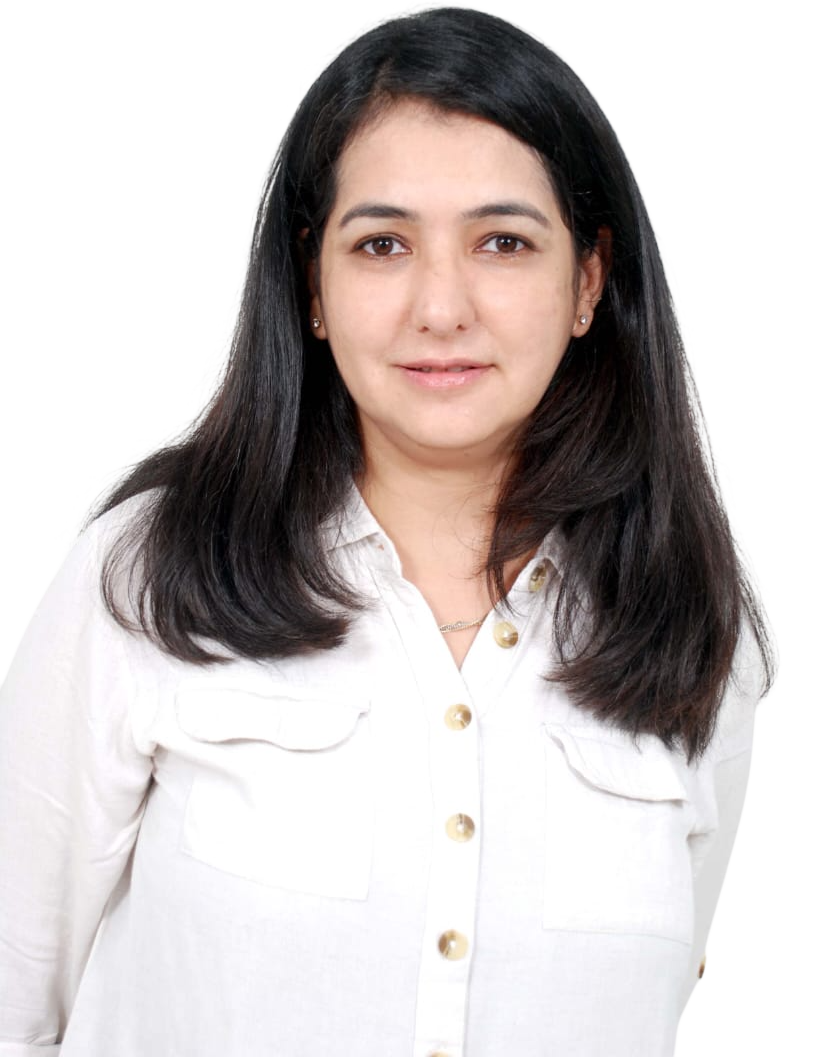
At Kalp Clinic, located in Shyamal, Ahmedabad, Gujarat, India, families can enquire about relevant child development and paediatric therapy services with Dr. Prabha Harwani (PT) – Paediatric Therapist. Parents should confirm the availability of dedicated speech-language assessment or specialist speech therapy directly with the clinic.
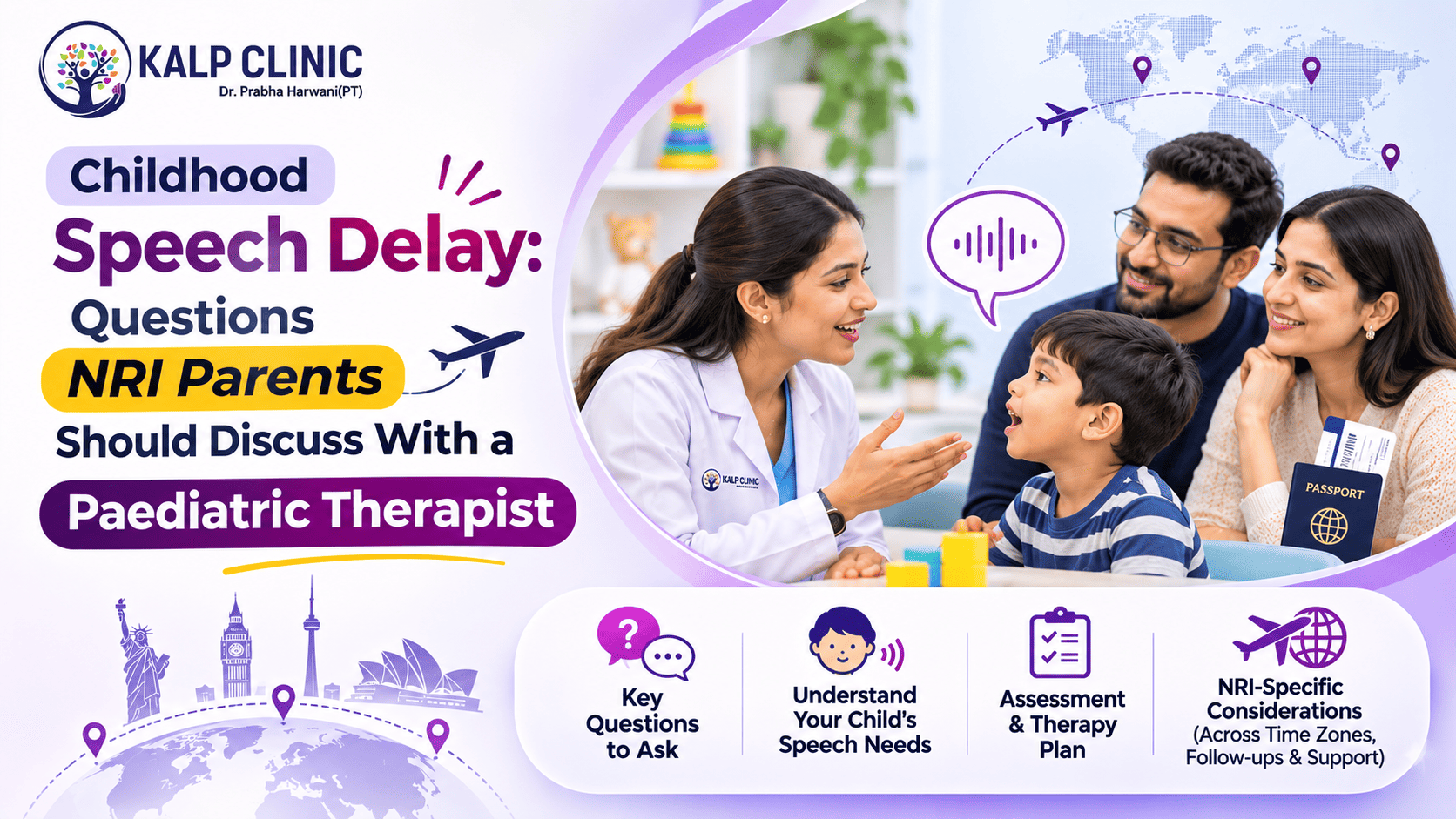
This article explores important questions NRI parents should discuss when seeking guidance about speech and language development during a visit to Ahmedabad.
What Is Childhood Speech Delay?
Childhood speech delay refers to a situation in which a child's spoken communication skills develop more slowly than expected for their age.
Speech and language are connected, but they are not exactly the same.
-
Speech: The production of sounds and words, including pronunciation, clarity and fluency.
-
Language: Understanding and using words, sentences, gestures and other communication methods.
-
Receptive language: Understanding what other people say or communicate.
-
Expressive language: Using words, gestures or other methods to express thoughts, feelings and needs.
For example, a child may understand familiar instructions but use very few spoken words. Another child may speak frequently but have difficulty forming sentences or being understood by others.
Some children experience difficulties in both speech production and language development. Therefore, identifying the nature of the concern is important before deciding what support may be appropriate.
Parents searching for Speech Delay Treatment for Kids should understand that the right approach depends on an individual assessment rather than a single solution for every child.
Why NRI Parents Should Pay Attention to Speech and Language Development
Children growing up overseas may experience different communication environments at home, school and within their wider community.
For example:
-
A child may speak English at preschool and Gujarati at home.
-
Parents may communicate in Hindi while grandparents use Gujarati.
-
The child may understand one language better than another.
-
School teachers may notice communication difficulties that parents do not observe at home.
-
The child may use gestures more frequently than spoken words.
These differences are common in multilingual households. However, parents should not automatically assume that limited speech is simply the result of learning multiple languages.
Multilingual exposure does not itself cause a speech or language disorder. A proper evaluation should consider the child's complete language background and communication abilities across the languages they use.
For NRI families from the USA, UK, Canada, Australia and Singapore, explaining the child's language environment is an important part of a speech development consultation in India.
Early Signs of Speech Delay Parents Should Recognize
Parents are often the first to notice differences in their child's communication. Observations from daily routines, play and family interactions can provide useful information.
Some signs worth discussing with an appropriate professional include:
-
Limited babbling or sound-making during infancy.
-
Not consistently responding to familiar voices or sounds.
-
Limited use of gestures, such as pointing or waving.
-
Difficulty understanding simple age-appropriate instructions.
-
Using fewer spoken words than expected for the child's developmental stage.
-
Difficulty combining words into meaningful phrases.
-
Frequently becoming frustrated when trying to communicate.
-
Speech that is difficult for familiar people to understand.
-
Limited participation in interactive conversations or play.
-
Losing previously acquired communication skills.
These signs do not automatically confirm a speech or language disorder. They indicate that parents may benefit from discussing their observations with a qualified healthcare or developmental professional.
A loss of previously acquired communication skills should be discussed promptly with an appropriate professional rather than simply waiting for improvement.
Important Questions NRI Parents Should Discuss With a Paediatric Therapist
When consulting a paediatric therapist in Ahmedabad, NRI parents should prepare questions about the child's communication, developmental history and possible assessment requirements.
The following questions can help make the discussion more useful.
1. Is My Child's Speech Development Appropriate for Their Age?
Children develop communication skills at different rates, but developmental milestones provide useful reference points.
Parents can ask:
-
What communication skills are generally expected at my child's age?
-
Should I be concerned about the number of words my child uses?
-
Is my child understanding instructions appropriately?
-
Does my child use gestures and expressions to communicate?
-
Which developmental skills should we observe more closely?
A professional should consider the child's overall development rather than evaluating speech based on one milestone alone.
2. Could My Child Have a Speech Delay or Language Development Difficulty?
Not every child with limited spoken words has the same communication difficulty.
Some children may have trouble producing speech sounds, while others may experience difficulty understanding language, expressing ideas or forming sentences.
Parents should ask whether their observations suggest a need for a dedicated speech-language assessment.
A qualified professional can also advise whether further evaluation by a speech-language pathologist, paediatrician, audiologist or another specialist is appropriate.
3. Should My Child Have a Hearing Assessment?
Hearing is closely connected to speech and language development. Children learn communication sounds by listening to the people around them.
A hearing evaluation may be worth discussing if the child:
-
Does not consistently respond to their name.
-
Frequently asks people to repeat themselves.
-
Has a history of recurring ear infections.
-
Appears to miss spoken instructions.
-
Shows difficulty recognizing familiar sounds.
Parents should not assume that hearing is normal simply because their child responds to certain sounds.
A healthcare professional may recommend a formal hearing assessment as part of investigating speech and language concerns.
4. Does Growing Up With Multiple Languages Affect Speech Development?
This is one of the most common questions among NRI parents.
Children may hear Gujarati, Hindi, English or other languages throughout their daily routines. Their vocabulary and communication patterns may differ depending on which language they use with family members, teachers and friends.
Parents should explain:
-
Which languages are spoken at home.
-
Which language the child uses at school.
-
When the child started hearing each language.
-
Which languages the child understands.
-
Whether the child mixes words from different languages.
-
Whether communication difficulties appear across languages.
Multilingual children should not be judged only by their vocabulary in English. Their communication across all languages should be considered.
Parents should also avoid unnecessarily stopping their family language because of speech concerns. Meaningful communication with parents and relatives in familiar languages remains valuable.
5. Should We Consult a Speech-Language Pathologist?
A paediatric therapist can discuss developmental concerns and guide parents towards appropriate next steps. However, a comprehensive speech and language assessment should be conducted by an appropriately qualified speech-language professional.
Parents can ask:
-
Does my child need a speech-language assessment?
-
Should we consult a speech-language pathologist?
-
What qualifications should we look for?
-
Can previous overseas assessment reports be reviewed?
-
What type of evaluation is appropriate for my child?
Families searching for the Best Child Speech Therapist in Ahmedabad should check professional qualifications, experience with children and the suitability of the assessment process.
It is important to distinguish between paediatric therapy services and specialist speech-language therapy. Parents should confirm which professional will provide the specific service.
6. What Type of Speech Development Assessment May Be Required?
A speech development assessment helps understand how a child communicates and identifies areas that may require further attention.
Depending on the child's needs, an evaluation may include:
-
Reviewing developmental and medical history.
-
Discussing communication at home and school.
-
Observing the child's interaction and play.
-
Assessing understanding and use of language.
-
Reviewing speech sound production, where appropriate.
-
Considering hearing status.
-
Understanding the child's multilingual environment.
-
Identifying whether further specialist evaluation is needed.
Parents should ask what the assessment can establish and whether additional professional evaluations are recommended.
An assessment should be individualized. Not every child needs the same tests or the same type of intervention.
Speech Delay Assessment for NRI Children Visiting Ahmedabad
Many NRI families plan visits to India during school holidays, festivals or family occasions. Some parents use this opportunity to seek professional guidance about concerns they have noticed while living overseas.
A Child Speech Delay Consultation in Ahmedabad can be an opportunity to discuss these observations and understand whether further assessment is appropriate.
Before making an appointment, parents should consider:
-
The child's age and current communication abilities.
-
Previous speech or language assessments.
-
Concerns reported by preschool or school teachers.
-
Languages spoken at home and school.
-
Any hearing assessment reports.
-
Previous recommendations from healthcare professionals.
Parents can contact Kalp Clinic before travelling to enquire about available consultation options and relevant paediatric services.
The type and duration of an assessment depend on the child's individual needs. Parents should not assume that every concern can be fully evaluated or addressed during a single short visit.
What NRI Parents Should Bring to a Child Speech Consultation
If your child has previously received developmental or speech-related support overseas, relevant documents may help the professional understand their history.
Consider bringing:
-
Previous speech and language assessment reports.
-
Hearing test reports, if available.
-
Relevant medical and developmental history.
-
Preschool or school observations.
-
Previous therapy recommendations.
-
Information about languages spoken by the child.
-
Notes about words, sentences and gestures used at home.
-
Examples of communication difficulties observed in daily activities.
Parents may also prepare a short list of questions before the consultation.
Short videos showing natural communication may sometimes help illustrate specific concerns. However, these should be recorded and shared appropriately, with attention to the child's privacy.
How Parents Can Encourage Communication Development at Home
Everyday family interactions provide valuable opportunities for children to practise communication.
Depending on professional recommendations, parents may consider the following activities:
-
Shared reading: Read picture books together and discuss familiar objects, people and activities.
-
Everyday conversations: Talk about meals, toys, family activities and daily routines.
-
Interactive play: Follow the child's interests and encourage turn-taking.
-
Language modelling: Expand on the child's words naturally. If the child says "car", a parent might respond, "Yes, a blue car."
-
Waiting for responses: Give the child enough time to communicate without rushing to answer for them.
-
Encouraging gestures: Recognize pointing, facial expressions and other communication attempts.
-
Reducing passive screen use: Make room for conversations, shared activities and face-to-face interaction.
Parents should avoid forcing children to repeat words, creating pressure during conversations or comparing their progress with other children.
If a child has an identified communication difficulty, activities should be guided by an appropriately qualified professional.
Choosing the Best Child Speech Therapist in Ahmedabad for NRI Families
Parents searching online for the Best Child Speech Therapy near me in Ahmedabad or the Best Paediatric Therapy Center Ahmedabad should evaluate the suitability of the service rather than relying only on promotional claims.
Consider these factors:
-
Relevant professional qualifications and credentials.
-
Experience working with children.
-
Understanding of speech and language development.
-
Experience with multilingual communication, where relevant.
-
Appropriate assessment procedures.
-
Clear explanations of observations and recommendations.
-
Communication with parents about developmental goals.
-
Willingness to recommend specialist referrals when required.
-
Transparent information about services and appointment arrangements.
Families searching for the Best Child Development Center in Shyamal, Satellite Ahmedabad should also enquire about the professionals involved, available services and whether the center can address the specific concern.
The most appropriate professional is one whose qualifications and services match the child's individual requirements.
How Kalp Clinic Can Help NRI Parents Visiting Ahmedabad
For NRI families visiting India, Kalp Clinic in Shyamal, Ahmedabad, provides an opportunity to enquire about relevant child development and paediatric therapy services.
Parents can contact the clinic to discuss their concerns and ask about available consultation options with Dr. Prabha Harwani (PT) – Paediatric Therapist.
Before booking, families should confirm:
-
Which child development and paediatric therapy services are currently available.
-
Whether the clinic can discuss their child's particular developmental concern.
-
Whether previous assessment reports can be reviewed.
-
Whether a specialist speech-language assessment or referral is required.
-
Appointment availability during their planned visit.
Parents looking for Child Speech Therapy in Ahmedabad for NRI Families should confirm whether dedicated speech therapy is provided at the clinic and the qualifications of the professional responsible for that service.
Kalp Clinic is located in Shyamal, Ahmedabad, Gujarat, India.
Website: www.kalpclinics.com
A clear discussion about the child's communication needs can help parents understand suitable next steps and make informed decisions about professional support.
Childhood speech delay can raise many questions for parents, particularly when children grow up in multilingual environments or attend schools in countries outside India. Understanding speech and language milestones, observing communication patterns and seeking appropriate professional advice are important steps.
For NRI parents living in the USA, UK, Canada, Australia, New Zealand, Singapore and other countries, a visit to Ahmedabad may provide an opportunity to discuss developmental concerns and understand whether further evaluation is needed.
Parents should remember that multilingual exposure does not itself cause speech delay, and every child has individual developmental needs. Hearing, language understanding, speech production and overall communication may all need consideration.
If you are planning an India visit and want to discuss your child's developmental needs, contact Kalp Clinic, located in Shyamal, Ahmedabad, and enquire about relevant services with Dr. Prabha Harwani (PT) – Paediatric Therapist.
Visit www.kalpclinics.com to learn more about Kalp Clinic and enquire about available appointments and services.
Frequently Asked Questions About Childhood Speech Delay
1. When should NRI parents become concerned about speech delay in children?
Parents should discuss concerns when a child is not developing expected communication skills, has difficulty understanding or expressing language, or loses previously acquired communication abilities. A qualified professional can consider the child's age, history and overall development.
2. Can NRI children who speak Gujarati, Hindi and English experience speech delay?
Yes. Multilingual children can experience speech or language difficulties, just like children who use one language. However, learning multiple languages does not itself cause a speech or language disorder. Assessment should consider communication across all languages used by the child.
3. Can NRI parents arrange a child speech consultation during their visit to Ahmedabad?
Parents can contact Kalp Clinic before travelling to enquire about appointment availability and relevant paediatric therapy services. The specific consultation options should be confirmed directly with the clinic.
4. Should NRI parents bring previous speech therapy reports from their home country?
Yes. Previous speech-language assessments, hearing reports, developmental records and therapy recommendations can provide useful information about the child's communication history.
5. Can a child receive a speech delay assessment during a short visit to India?
Parents can enquire about assessment availability before travelling. The time required depends on the child's age, communication profile and the type of professional evaluation needed. A single visit may not be sufficient for every child.
6. Does Kalp Clinic provide speech delay treatment for kids?
Parents should contact Kalp Clinic directly to confirm the availability of dedicated speech-language assessment or speech therapy services and the qualifications of the professional providing them.
7. How can NRI parents find the Best Child Speech Therapist in Ahmedabad?
Parents should check the professional's qualifications, experience with children, assessment methods, understanding of multilingual development and ability to explain recommendations clearly.
8. Can growing up in the USA, UK, Canada or Australia affect a child's speech development?
The country where a child grows up does not automatically cause speech delay. However, the child's language exposure, opportunities for interaction, hearing and individual developmental factors may be relevant when understanding communication concerns.
9. How can parents support speech development at home?
Parents can encourage communication through shared reading, interactive play, everyday conversations, language modelling and allowing children enough time to respond. Activities should be appropriate to the child's needs and professional recommendations.
10. Where can NRI parents enquire about child development services in Shyamal, Ahmedabad?
NRI parents can visit www.kalpclinics.com to learn more about Kalp Clinic in Shyamal, Ahmedabad, Gujarat, India, and enquire about available paediatric therapy services and appointments with Dr. Prabha Harwani (PT).