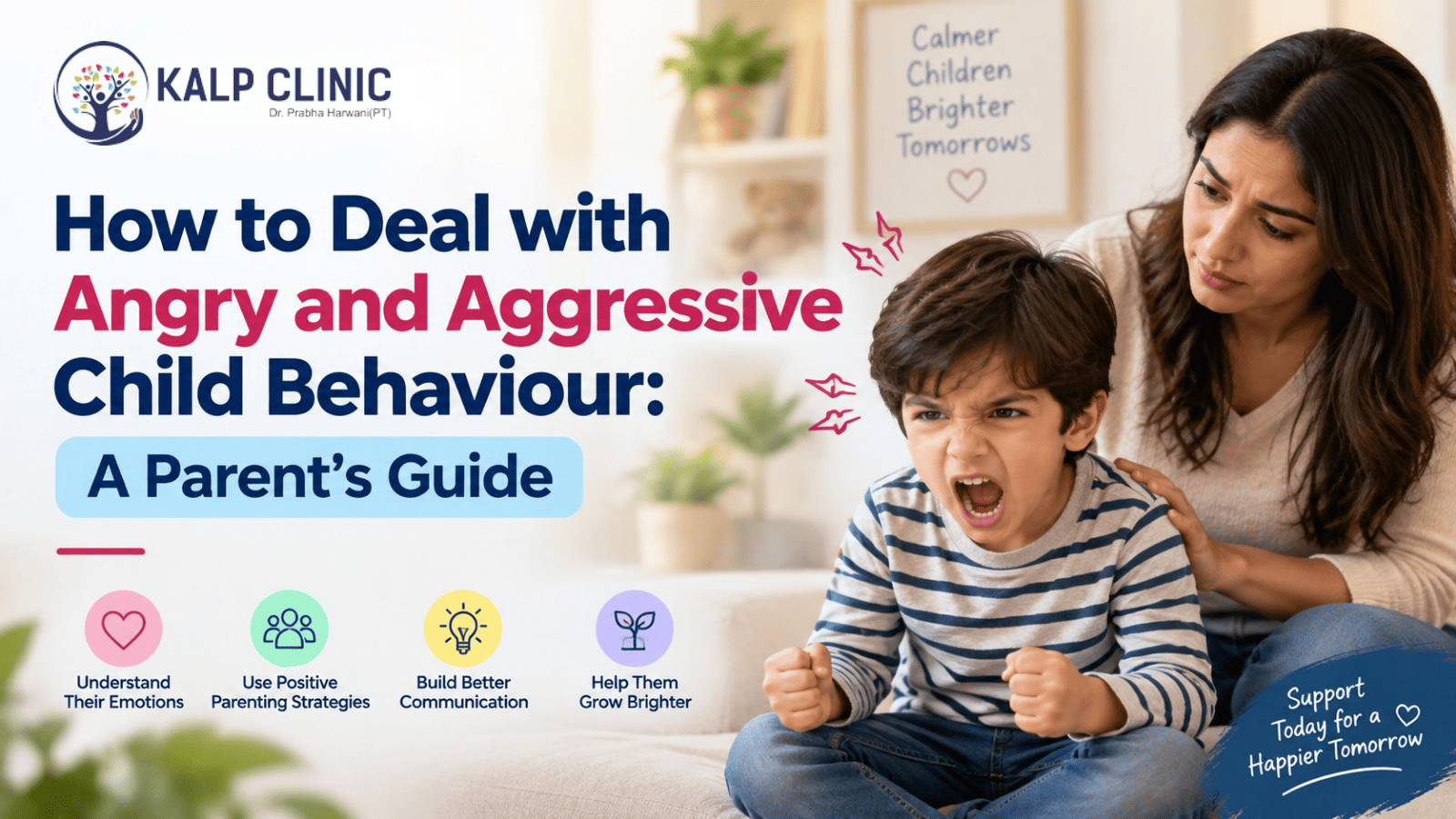
School is an important part of every child's development. It is where children learn academic skills, build friendships, develop confidence, and understand social rules. However, many parents receive complaints from teachers about their child's behavior in the classroom. Some children may struggle to follow instructions, while others may become disruptive, aggressive, inattentive, withdrawn, or emotionally overwhelmed.
When behavior problems occur at school, parents often feel confused, frustrated, or worried about their child's future. The good news is that behavioral challenges can often be understood, managed, and improved with the right support and guidance.
At Kalp Clinic, located in Shyamal, Ahmedabad, Gujarat, India, we work closely with children and families to identify the underlying causes of behavioral concerns and develop effective intervention strategies. Under the guidance of Dr. Prabha Harwani (PT) – Paediatric Therapist, children receive personalized support designed to improve behavior, emotional regulation, attention, communication, and social skills.
Understanding Child Behaviour Problems at School
Behavior problems are not always a sign that a child is being intentionally difficult. In many cases, challenging behaviors are a child's way of expressing frustration, stress, anxiety, communication difficulties, sensory challenges, learning struggles, or emotional needs.
Some common school behavior concerns include:
-
Frequent temper tantrums
-
Difficulty following classroom rules
-
Aggressive behavior toward peers
-
Poor attention and concentration
-
Hyperactivity and impulsivity
-
Excessive talking during lessons
-
Refusal to participate in activities
-
Emotional outbursts
-
Social difficulties
-
Difficulty staying seated
-
Oppositional behavior
-
Classroom disruptions
Understanding the reason behind the behavior is the first step toward finding a solution.
Why Do Children Develop Behaviour Problems at School?
Every child is unique, and there may be multiple factors contributing to behavioral challenges.
Difficulty Managing Emotions
Many children struggle to express emotions appropriately. When they feel frustrated, disappointed, anxious, or overwhelmed, they may react through negative behaviors instead of communicating their feelings.
Attention and Concentration Challenges
Children with attention difficulties often find it hard to stay focused during lessons. This may lead to frequent distractions, incomplete work, and behavioral concerns.
Parents searching for support often look for ADHD Therapy for Children, Attention Improvement Programs, and Child Behaviour Management Therapy to help improve focus and self-regulation.
Learning Difficulties
When children struggle academically, they may become frustrated or lose confidence. Behavioral issues sometimes emerge as a response to challenges in reading, writing, comprehension, or classroom participation.
Social Skill Deficits
Some children find it difficult to understand social cues, share with peers, take turns, or communicate effectively. These difficulties can result in conflicts with classmates and behavioral concerns.
Sensory Processing Challenges
Certain children may become overwhelmed by noise, lights, crowded classrooms, or changes in routine. Sensory difficulties can significantly affect behavior and classroom participation.
Communication Difficulties
Children who struggle to express their thoughts, needs, or emotions may display frustration through behavior rather than words.
Signs Parents Should Not Ignore
Occasional behavior problems are normal. However, persistent concerns should be addressed early.
Parents should seek professional guidance if their child:
-
Receives frequent complaints from school
-
Has difficulty making friends
-
Shows aggressive behavior regularly
-
Experiences emotional outbursts
-
Cannot focus on tasks
-
Struggles to follow instructions
-
Avoids school activities
-
Displays extreme hyperactivity
-
Shows signs of anxiety or withdrawal
-
Experiences academic decline due to behavior
Early intervention often prevents problems from becoming more severe.
What Parents Should Do When Behaviour Problems Occur
Stay Calm and Listen
When teachers report behavioral concerns, avoid reacting with anger or punishment immediately. Instead, gather information and understand the situation from both the teacher's and child's perspective.
Ask questions such as:
-
What happened?
-
When does the behavior occur?
-
How often does it happen?
-
What triggers the behavior?
A calm and supportive approach encourages children to communicate openly.
Work Together With Teachers
Parents and teachers should work as a team to support the child.
Effective collaboration includes:
-
Regular communication
-
Consistent expectations
-
Shared behavior goals
-
Monitoring progress
-
Positive reinforcement strategies
Children respond better when school and home environments provide consistent guidance.
Focus on Positive Behaviour
Children often repeat behaviors that receive attention. Instead of focusing only on mistakes, recognize and reward positive actions.
Examples include:
-
Following instructions
-
Completing tasks
-
Sharing with others
-
Managing emotions appropriately
-
Showing respect
Positive reinforcement helps build confidence and motivation.
Establish Clear Routines
Predictable routines provide structure and reduce anxiety.
Helpful routines include:
-
Fixed sleep schedules
-
Homework routines
-
Screen-time limits
-
Consistent meal times
-
Daily responsibilities
Children often behave better when they know what to expect.
Encourage Emotional Expression
Teach children healthy ways to express emotions.
Encourage them to:
-
Talk about feelings
-
Identify emotions
-
Practice problem-solving
-
Use calming strategies
-
Ask for help when needed
Emotional awareness is an important part of behavioral development.
The Importance of Professional Support
Sometimes behavioral challenges require professional assessment and intervention.
Parents frequently search for services such as:
-
Child Behaviour Therapy
-
Behaviour Modification Therapy
-
Behaviour Therapy for Children
-
Child Psychology Support
-
Social Skills Training for Children
-
ADHD Therapy Programs
-
Emotional Regulation Therapy
-
Pediatric Occupational Therapy
-
Child Development Assessment
Professional support helps identify the root cause of behavioral concerns and develop individualized intervention strategies.
How Therapy Can Help
Behavior-focused intervention programs help children develop the skills needed to succeed at home, school, and in social environments.
Therapy may focus on:
-
Improving attention and concentration
-
Developing emotional regulation
-
Building social skills
-
Managing frustration
-
Enhancing communication abilities
-
Increasing self-control
-
Reducing disruptive behaviors
-
Improving classroom participation
Many children show significant improvements when therapy is combined with family involvement and school collaboration.
The Role of Occupational Therapy in Behaviour Management
Many parents are surprised to learn that occupational therapy can play an important role in improving behavior.
Children experiencing sensory processing difficulties often benefit from structured occupational therapy programs that help them:
-
Improve self-regulation
-
Manage sensory input
-
Increase focus
-
Enhance attention
-
Improve participation in classroom activities
This is why many families seek professional support through Paediatric Occupational Therapy for Children when behavior concerns affect learning and daily functioning.
Why Early Intervention Matters
One of the biggest mistakes parents make is waiting too long before seeking help. Many behavioral concerns become easier to manage when identified early.
Benefits of early intervention include:
-
Improved academic performance
-
Better social relationships
-
Increased confidence
-
Stronger emotional regulation
-
Reduced stress for families
-
Greater independence
-
Improved classroom participation
The earlier support begins, the greater the opportunity for positive developmental outcomes.
Why Families Trust Kalp Clinic
At Kalp Clinic, we understand that every child's behavior tells a story. Rather than simply addressing symptoms, we focus on identifying the underlying causes and helping children develop the skills they need to succeed.
Families choose Kalp Clinic because of:
-
Personalized therapy plans
-
Child-centered approach
-
Comprehensive developmental assessments
-
Family involvement and guidance
-
Evidence-based therapy methods
-
Supportive environment
-
Focus on measurable progress
Under the expert guidance of Dr. Prabha Harwani (PT) – Paediatric Therapist, children receive individualized support designed to improve behavior, attention, emotional regulation, communication, and social development.
Behavior problems at school can be challenging for both children and parents, but they should never be ignored. Understanding the causes behind challenging behaviors and providing the right support can help children develop positive habits, stronger relationships, and greater confidence.
If your child is experiencing behavioral difficulties at school, early guidance and professional intervention can make a meaningful difference. At Kalp Clinic, we are committed to helping children overcome developmental and behavioral challenges through personalized therapy and family-centered care.
Kalp Clinic
Dr. Prabha Harwani (PT) – Paediatric Therapist
Website: www.kalpclinics.com
Location: Shyamal, Ahmedabad, Gujarat, India